Thursday, March 24, 2022

Safety Country


Known by many as an overly cautious country, Japan has a sizable bureaucratic culture ready to closely observe the every need of its readily compliant citizenry. For many foreigners this system may seem highly unusual. For example to receive a chart in the mail detailing the types of human excrement that exist, what each type means, and how one can have proper bowel movements may seem as an example of extreme government oversight, however for Japanese these seeming encroachments upon life are heartily welcomed. The Japanese as a people have no guiding objective morality system or much emphasis placed on critical thinking processes, but rather tend to rely upon an overly burdensome system of bureaucracy with many loop holes and subjective interpretations based upon local groups for guidance. These often confusing webs of bureaucracy interwoven into society seem to exist to help create a sense of peace and safety through human control.

For instance, recently when we arrived into the country via airplane (with only 27 other passengers) we were carefully guided on a long journey through the opposite ends of the airport to complete various tasks set in place by the Japanese government to ensure that the Covid-19 virus would be contained. Before arriving in country we were required to take official Covid tests within 72 hours. Through multiple check points over the course of four hours we completed paperwork, presented our passports, and presented our negative Covid tests over and over while being greeted with friendly Japanese faces. As we walked from station to station across various parts of the airport covering at least a mile on foot we eventually took new Covid tests, signed any remaining rights away, installed a phone-tracking app (as well as required to rent a phone if you didn't have a smart phone), and waited at the end to get our test results which turned out negative. Throughout this process we came in contact with at least twenty to thirty Japanese people as well as various other passengers who may or may not have been infected with Covid during this process. On the surface this type of bureaucracy seems illogical to outside observers as there were multiple points of exposure that would appear to be counter-productive in containing a virus, however in the Japanese mindset this type of setup was the best way to ensure safety of the population from potential contamination! The Japanese people have come to expect this as normal and willingly submit themselves to all kinds of bureaucracy as a normal part of life believing that it is for the greater good.

In a country with a vast majority of people (199/200) with no knowledge of God, government defacto becomes God to them – complete with all of its imperfections, inefficiencies, controls, and precautions. Still even in a country with all needs considered and lives planned there is a great emptiness. Mankind cannot find peace apart from God.


Sunday, January 16, 2022

2021: Year in Review


It is that time to review the year once again! No matter where you lived 2021 will be remembered as a challenging year. April 2022 will mark our fifth year as a family in Japan. What was 2021 like for us?

For us 2021 was a tiring year as we had planned to go back to the US for furlough in 2020, but were unable to due to the issues in travel associated with COVID. We instead decided to push ourselves and stay another year in Japan believing that we could do more ministry rather than going back to the USA, staying indoors, as well as not visiting many churches due to Covid cancellations. We stayed in Japan continuing to invest in people, teach English using the Bible, and doing our daily evangelism not knowing exactly what the future would hold. During this time we invested in a lot of online ministry including social media and our website AfterDeathTruth.net. Many thousands read our website as well as gospel tracts.

2021 was also a year for tragedy as a few people died. Dennis, whom I had led to the Lord and started to disciple passed away due to complications. ( https://youtu.be/dPsQNgTDeTw ) Our friend Bill, a veteran missionary, also passed away from Covid. Also, Katie's grandfather passed away from old age while we were in the USA. Fortunately we were able to see him before he passed and attend his funeral. A few people that we knew from the USA and Japan also passed away during this season. However, it was also a time for joy as our son Albert was born! It was an answered prayer that he got to meet his great grandfather for whom he was named and bring him much joy before Grandpa Albert passed. If we had came in as we had planned earlier our Albert would not have been born yet and this couldn't have happened. We praise God for his perfect timing!

I tried to attend the 2020 Tokyo Olympics which was moved to 2021, but had a lot of difficulties due to the strictness of the event. Our special ordered Japanese tracts didn't come until after the Olympics finished, so we were only able to get out a few hundred gospel tracts at the opening ceremony. There were more police than people at the event, which included protests to shut it down due to Covid! The event was not as productive as we had hoped it would be.

From August 2021 onward we returned to the USA for furlough, transitioned back to American life, visited many churches, and reconnected with many people. We were able to experiences the changes happening in the USA while engaging people in evangelism. (Especially Hispanic people in every city we went to in the USA with Spanish gospel tracts.) We were able to update our information, prayer card, and rest considerably. 2021 was a difficult year for many, but also a year of blessings. We look forward to returning to Japan in March Lord willing to continue on to our second term as a family. This will be an exciting time as we hope to move to a new area and start the process of church planting. Thank you for your prayers and support!

Saturday, November 20, 2021

The 10-40 Window


Now that we have been back in the United States for three months we have had opportunity to visit with many churches to speak about Japan. One thing that I am somewhat surprised about is that there are still people that do not know exactly what the “10-40 Window” is. With that in mind I have decided to write a blog post on the 10-40 Window.

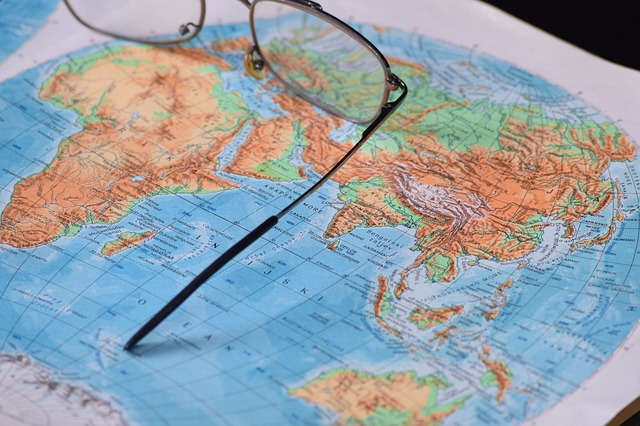
What is the 10-40 Window? Quite bluntly, from an American Christian prospective it is the area of the world that has the greatest population (4 billion) with the most needs, least Christian population, highest Christian persecution, and most neglected for missionary activity. From 10 degrees latitude to 40 degrees latitude, from Morocco in the West to Japan in the East, the 10-40 Window can be located on a map. It comprises of the Islamic, Hindu, and Buddhist dominated countries. From this link , under the 'map view' option, we can see exactly the reality of each country in the 10-40 Window.

How did this happen? Somewhere along the line in the past after the great flood someone's ancestor rejected God, choosing rather to worship created beings, and passing that knowledge down to further generations. Along the way knowledge of God was lost. In some cases idolatry has gone on for hundreds if not thousands of years, further strengthening the demonic power in these areas to this day.

Why are there so few missionaries in this region? Most of these countries are considered, “closed-countries” in which any kind of outside influence is either strictly prohibited or met with extreme punishment including death. Other countries are so far removed by distance, language, and education that an attempt to spread the gospel takes great resources, time, and sacrifice to accomplish with little immediate fruits exhibited. It is said that five cents out of every one hundred dollars spent on missions goes to this region! There is little glory yet great risk involved in going to this area of the world. Unfortunately, given the type of modern Christianity formed in the west, namely “me-focused” gospels, very few in up-and-coming generations are willing to sacrifice greatly to reach these areas, nor do they care to.

What can we do? We can pray for these regions that God would raise up people to reach them. We can also support legitimate missionaries working in this region. Whereas the Western missionaries have failed in this area, many Asian countries such as South Korea, Philippines, and India have raised up many missionaries to start works in many of these countries. Satellite TV, Internet, and Western Educational resources have reached a great many people in these regions directly and indirectly as well. God is working even through Covid-19 circumstances.

I encourage anyone reading to do some research on the 10-40 Window. Start praying for countries in this region and see what you can do to help.


Tuesday, September 21, 2021

COVID Abroad in Japan


It has become quite clear in the last year that our world is ever-changing due to the COVID virus issue as well as the government responses to how best to deal with the issue. Sometime in March 2019 in Japan we started to experience signs of COVID as toilet paper lines and mask shortages became a reality. A few months later this reality started to hit home in the United States. What was that experience like in Japan? This is one of the most common questions that we get.

Japan prides itself on being a homogeneous society, so the response to COVID appeared to be immediate and uniform. Japanese typically wear masks anyway given their close proximity in daily life, desire to prevent spreading of sickness to others, and general cleanliness. When COVID came on the scene society quickly wore masks everywhere believing that it would prevent viral spread. Even to this day they continue to wear masks everywhere. Almost immediately every area open to the public had hand wash sprays out with requirements for use upon entry. Some of the larger stores also had head thermometers to determine if the body temperature was at fever levels. Eventually the nightlife areas were shut down as they were determined to be a major spreading areas. The Japanese solution was to close down known drinking areas as well as limit restaurants to a 7 P.M. curfew. Japanese people were hesitant to get the vaccine, however when the government began to issue them by age category almost every elderly person immediately got one. However, there is still a portion of society that refuses the vaccine. As of the writing of this article about 60% of Japanese have received a vaccine.

In general, currently in Japan the infection as well as death numbers are very low compared to most countries. I believe this has to do with the Japanese culture itself in that Japanese tend to keep their distance, don't touch, and have excellent hygiene practices in general. Almost immediately Japan also closed its borders to international travel to most people unless they had special permission which was difficult to get. Even now it is very difficult to gain access into the country unless you were a prior resident. For this reason many in ministry have not been able to gain access into Japan. Also, many in ministry have come off the field as well. We plan to re-enter Japan in the winter time. Please pray for Japan that they would re-open their borders so that families can see each other, business can occur, and ministry can be done.


Friday, July 16, 2021

Tokyo Summer Olympics 2020? 2021?


All around the world there has been great anticipation for the 2020 Summer Olympics in Tokyo, however events took a different course when the Covid19 outbreak rapidly changed international plans. Now Japan, who has spent billions of dollars on constructing new stadiums, advertising, and staff faces increasing opposition to the Olympics both locally and internationally. Originally, the plan was to move the Olympics to the summer of 2021 in the hopes that the virus would dissipate over the course of a year. This view received full approval and is still continuing on despite heavy opposition. The proponents believe that hosting the Olympics will show the world that we can beat the virus and that we must continue to go on as normal, while those opposing fear that hosting the Olympics will spread the virus in Japan's main mega-city.

Thus far Tokyo has remained quite well protected from Covid19 with maximum infection levels reaching around 1000 per day at the most, which is quite incredible for a city of 38 million. The current total numbers in Japan for Covid19 infections are about 830,000 out of 126 million people. The death total is around 15,000. Interestingly enough the population is largely unvaccinated. Tokyo itself has cycled through seasons of lockdown and no lockdown depending on the infection numbers. Currently the new lockdown is in effect until August 22nd. Officials originally decided to allow spectators at half capacity of the stadiums, then decided a maximum of 10,000 spectators, and now they are saying no spectators. There was talk of letting limited foreign spectators come, but that was eventually decided against as well. Now there will only be 1000 special spectators allowed for the Opening Ceremonies.

Concerning athletes, they will need to live under strict conditions with constant Covid19 testing, social distancing, masking, and very limited interaction or travel in the city. They are also required to return home after all of their events are completed. Already some athletes from Uganda tested positive for Covid19 upon arrival, were isolated, and disqualified. Japanese media has focused on foreigners without masks which has stirred up fear as it is a common belief here that foreigners are the cause of virus spreading! Overall Japan has remained very strict when it comes to entry and departing with many mixed families (Japanese married to foreigners) still not able to see each other due to being caught overseas during the initial virus outbreak. Is it a good idea to have the Olympics? Will it be held? That still remains to be seen as mounting pressure increases. Please pray for us as we are going to attempt street evangelism during this tense time.


Saturday, May 15, 2021

Passing away in Japan


In the last year my friend Dennis as well as two elderly men in church have passed away. In every country it is important to understand how people view death as well as how they deal with departed loved ones. What exactly happens when someone passes away in Japan? How is it different from the West? While in language school years ago my wife was required to watch a movie called 'Departures' which characterizes the traditional Japanese method of a funeral process. If you have two hours and are interested it would be worth viewing. However, I am told that the process is much more streamlined these days with the events that were depicted in the movie becoming increasingly rare.

For instance, in the West after someone has been legally declared dead the various processes begin including funeral services, legal, and financial. The body itself is usually dealt with quickly. In Japan the process may take awhile with the body remaining at the house given typical Japanese beliefs about the afterlife. Often times Buddhist priests are involved in various rituals to prepare the body for the afterlife as well as for the cremation process in the family temple. Most bodies are cremated as per traditional beliefs as well as a general lack of space for burying bodies in Japan. Although some churches have graveyards for bodies or “bone-closets” to store the ashes. In Japan Buddhism has retained much of its relevance by concerning itself primarily with the process of death with various rituals, beliefs, and grave-site management. The entire process itself can be very costly, however if the family cannot afford to pay the state will actually subsidize some of the expenses.

Most Japanese consider themselves to be Atheist with cultural Buddhism adhered to because of ancient cultural expectations. The Buddhist view of life is that of a circle complete with multiple lives and deaths over a long period of time until they are able to break free and achieve nirvana by doing various good works. Rituals after death are very important in this mindset because it is believed that they are helping the departed one to the next step of their reincarnation which can take a certain amount of time. Death as well as the body itself are viewed as important events. Whereas Westerners tend to view death as a one time event and life as a line with a beginning and an end. Americans tend to put less importance on the body itself and more value upon the eternal soul and the afterlife. With that being said the views of death are entirely different, however they can lead to important conversations about spiritual matters. We usually do not think much about death until it impacts us personally. This rare time can be used greatly by God. Please pray for Japan. 


Tuesday, March 16, 2021

Japan Culture Series 29: N.E.E.T. (ニート)


In reaction to the dominant performance-oriented culture, a group of people known as “NEETs” have arisen among new generations in Japan. NEETs are known as: “Not in education, employment or training.” How did this come about? In a recent YouTube video , the author describes a group of people who do not want to follow the path of previous Japanese generations in becoming salary-men. In Japan, from a very early age children are conditioned to immerse themselves in study in order to become an acceptable part of society. These often rigorous standards do not leave much time for anything but work with the ultimate goal of being completely dedicated to a company or trade for life. If this standard is not met then a person will be seen as useless. As has been stated before on this blog: in Japan the career is number one, family is number two, and God is last. Often times children will not know their father due to long hours away from home at work. For many salarymen a daily 10pm or later time of work is not uncommon. The trade off is materialism for family, which has created certain levels of social dysfunction.

In reaction to this culture, NEETs have arisen with various motives demonstrating to Japan that all is not well socially. Rather than continue the system of working long hours, these people have chosen rather to 'drop out' of society by living a minimalist lifestyle, or refusing to work by living off their parents or government. In Japan if a Japanese person is not a salary-man or some other respectable trade they will be looked down upon even if they can make a living using some unconventional means such as earning money through Internet (Youtube, Facebook, Buying/Selling/Trading etc.), small craft sales, Pachinko, etc. However, with the rise of working from home due to COVID cultural attitudes may be shifting. Many Japanese are now able to make money through the internet, small businesses, or other non-conventional means that do not require group involvement. For the majority culture in Japan this is a scary prospect that may change the established norms of society.

What do these changes mean for Christianity? In many ways these changes are showing that many Japanese in newer generations are beginning to think 'outside the box' more than in prior generations. As it is becoming more common to travel overseas or study abroad, more Japanese people are being exposed to new ways of living. When they return home they are not satisfied with a salary-man lifestyle. Though this can be fearful to the dominant culture it is helpful for the cause of the gospel. Those who are not overly busy actually have time to consider their purpose in life, why they exist, and what happens after they die. For this reason these people are far more open to God. Also, when these disenfranchised people are rejected by mainstream society, they can find that they have acceptance from God. Pray for those in Japan who have time for God.


Monday, January 18, 2021

2020: Year In Review


It is that time again to look back and reflect upon the previous year. What a year it was not only here in Japan but worldwide! This April 2021 will conclude our forth year here in Japan as a family. Our theme for this last year is as follows:

Trust in the LORD with all thine heart; and lean not unto thine own understanding. In all thy ways acknowledge him, and he shall direct thy paths.” - Proverbs 3:5-6 KJV

Our original desire was to return to the United States on a furlough after the 2020 Tokyo Olympics, however that plan changed quickly as we decided to stay longer due to a few factors including Covid19, travel restrictions, visa issues, and the US Elections. A few missionaries have been on freeze away from their ministries due to these issues, which has led us to rethink our strategy. The year has been filled with new territory in many ways. Our missionary motto has been close to adopting the quote from Teddy Roosevelt, “Do what you can with what you have where you are at.” As is evident over the past year with the Covid19 outbreak, various supply shortages, lock-downs, and global riots we had to shift our preconceived plans. Things do not always work out the way that we would like, so we have to quickly adapt and use our time wisely. We have continued to do evangelism in the form of giving out gospel tracts around Tokyo, giving out masks with gospel tracts early on, doing Christmas evangelism with gospel tracts and cookies, teaching English using the Bible, and switching to a lot of online evangelism through Facebook, Twitter, TikTok, YouTube, and AfterDeathTruth.net. The church we are working with here in Tokyo has seen 8 salvations in the past year with 2 that we have had a hand in as well as increased numbers of people watching services over the internet. This really demonstrates that many Japanese have been considering spiritual matters while they have had this unusual time to reflect on life more.

It is evident that the world is changing rapidly which could mean that the Age of Grace is coming to an end moving to the increased rise of globalism. For those who study Bible prophecy many indicators appear to be occurring that remind us to redeem our time, live for God, and not to trust in ourselves during these uncertain times. For those reading this blog it should be a time to reflect upon your life. What are you doing with your time? What are your priorities? Are you ready to face persecution? Are you ready to face God? If we have learned anything from this year it is that we are living in perilous times in which we make sure that we are in a right relationship with God.


Sunday, November 22, 2020

Japan Culture Series 28: Kawaii (可愛い)


It may come as a surprise to those obsessed with the historical romantic view of Japan as a great warrior culture that nothing dominates the Japanese cultural mindset more than the concept of Kawaii. Kawaii simply means cute, helpless, innocent, or lovable. In Japan no matter where a person travels they will be inundated with cute things whether it be advertising, city mascots, fashion, or the Japanese mindset of what is desirable. While in America we tend to be drawn to that which is 'cool' or 'sexy', the Japanese are certainly drawn to that which is Kawaii. This concept is so deeply held that even the most manly Yakuza gangsters can be melted by that which is Kawaii.

Upon first arrival in Japan I thought nothing of it, but now after having been here awhile I admit that I now am impacted by that which is cute. Being the father of two young daughters I cannot but help to be constantly reminded, whenever we go out, of cuteness from the average Japanese person. Many Japanese people are so saturated with the concept of Kawaii that when we do go out they will stop what they are doing and go into a kind of frenzy exclaiming how cute our children are. Sometimes we will even get a “Mecha Kawaii”, which means super cute. Why is this the case?

It seems to be the case that after seeing something cute and innocent we are instantly triggered with warm feelings. These sentiments have gradually been included into Japanese culture over time to where it is now a major force. The Japanese seem to have tapped into cuteness and turned it into a powerful force of marketing that can potentially change our perception about just about anything. Almost every city has a Kawaii-type mascot to draw attention to otherwise boring governmental business as well as tourism. Even the police have a Kawaii mascot intended to promote a safe or fun type image that inspires trust of authorities. This feel-good sense has been exploited to the max here in Japan to promote just about anything under the sun that can generate cash. It would seem that this love of all things Kawaii has generated a greater love for the things of this present world in the Japanese people's hearts. Cuteness has become something that Japanese people literally idolize. It seems to energize them as sort of an escape from a seemingly mundane, mechanical life of strict schedules and repetition.

God has certainly instilled within us a love for that which is innocent, cute, and helpless. When we reflect upon these things it reminds us of our own frail beginnings of infancy and early childhood. We can realize that we are really not as great and mighty as we think we are since we all came from humble beginnings. Once we realize this we can begin to realize that we are indeed not the greatest power in the galaxy, instead rather turning our focus to God which is the true great power. 

Saturday, September 19, 2020

Falling Away


A recent study in the United States indicated that one in fiveChristian” Americans would not return back to church after Covid19 issues end. In the United States there are many reasons for this as the culture shifts causing cultural Christianity to disappear. What about in Japan where the culture is already overwhelmingly opposed to Christianity? What do Christians face here?

Unlike the United States there is great pressure here to avoid Christianity given the underlying cultural norms that assume that being Japanese consists of: 1) Japanese racial identity, 2) Japanese language ability, and 3) Japanese accepted cultural norms which are heavily intermixed with Shintoism and Buddhism. All three of these elements make up “Japanese Culture”. An underlying assumption is that if you do not have these things, then you truly are not Japanese. So strong are these sentiments, that the few who do not agree with this understanding are readily shunned. 

Japanese are typically taught that Christianity is a “White man's religion from the West” that first came to Japan with the imperialistic intentions of the Jesuits and is therefore incompatible with Japanese values. However most Japanese are shocked to find out that Christianity is actually an Asian religion originating in the Middle East with most Christians being outside of The West. They are also shocked to find out that Christianity arrived into Japan before Buddhism and even has a Trinitarian God in its most ancient foundational religion that pre-dates Shintoism.

Ironically, Darwinism and Atheism, which are truly Western concepts are not questioned even though these ideologies have displaced Japanese culture more than any other in recent history! Even though most Japanese do not believe Shintoism or Buddhism personally the cultural pressure remains strong to give all outward appearances of adherence to said concepts.

When one decides to be a Christian here they are faced with the decision to potentially alienate themselves from their family and culture, which is a huge sacrifice in a group-oriented society. This has the effect of either creating a strong believer who lives for God or a life of stress, shame, and eventual surrender to the majority culture for those who desire to try to live in both worlds. 

One of the older ladies that my wife led to the Lord was faithful for years, traveling about two hours for church each Sunday, and even getting Baptized. However, when faced with continual family pressure as well as the realization that she would have to get rid of her family idols, it proved to be too much to handle, leading to her abandoning of the church. This is the sad reality for many Japanese Christians who have indeed learned the truth, received Christ as Savior truly, yet have returned back to their former lives preferring to live painfully as secret believers. It should be a reminder for Christians to determine which shame is greater; that of society, or that of our conscience and God. Please pray for Japanese Christians who have to make hard decisions in a world that is highly opposed to them living out their faith.